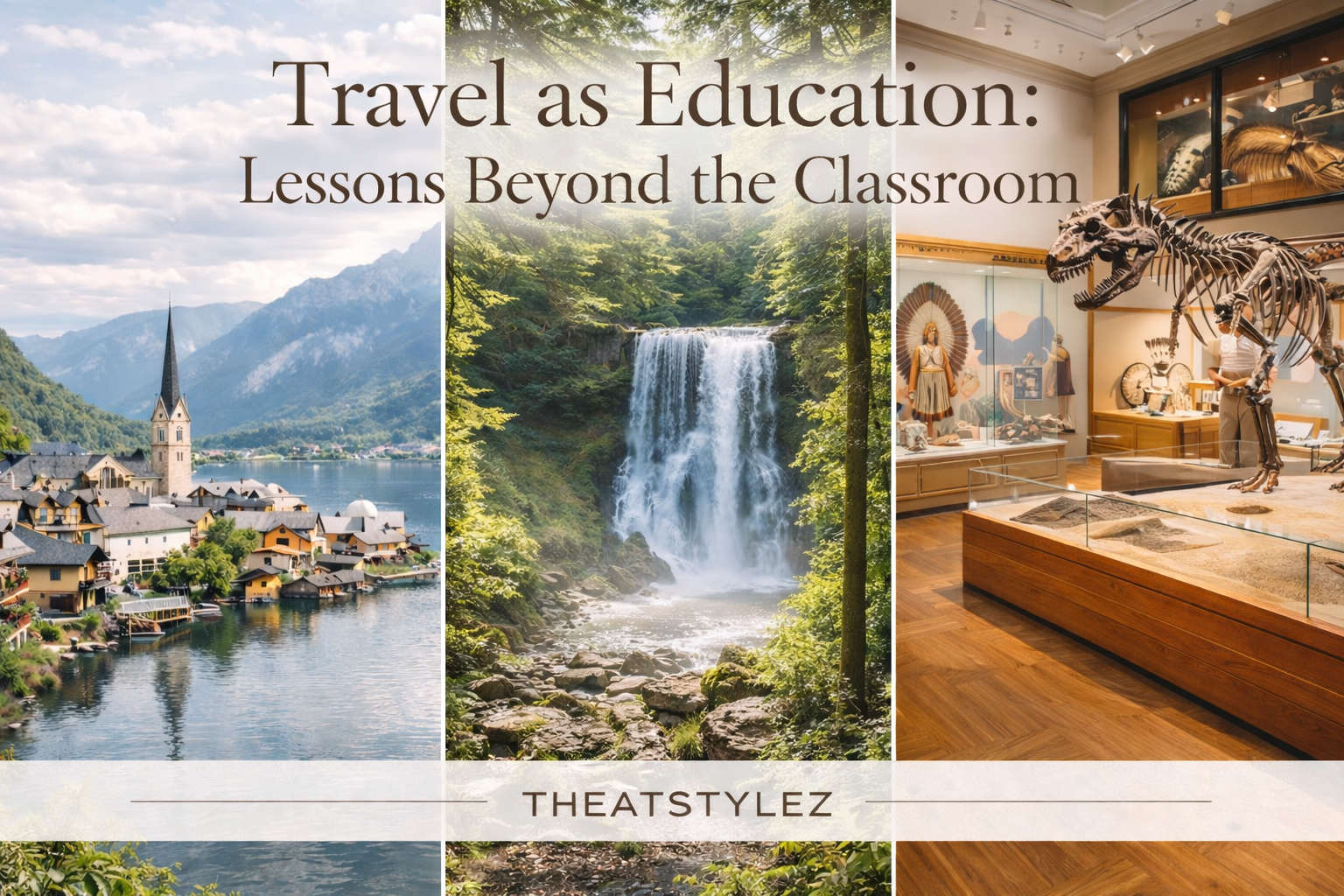
Travel doesn’t need to feel like a lesson plan to be educational. The most meaningful learning often happens naturally, through observation, conversation, and shared experience. Here are simple, realistic ways to make travel a learning opportunity.
1. Start With Local or Short Trips
Learning through travel doesn’t require big vacations. Day trips, nearby towns, state parks, or local museums can be just as impactful.
- Visit a nearby historical site or nature preserve
- Explore a neighboring city for the day
- Walk through a different neighborhood and observe architecture or culture
Small trips still offer new perspectives.
2. Let Curiosity Lead the Experience
Instead of planning every moment, allow space for questions and curiosity.
- Encourage your child to ask questions about what they see
- Pause to notice details: signs, landmarks, plants, languages, or customs
- Talk through observations casually rather than turning them into formal lessons
Curiosity-driven learning tends to stick longer.
3. Choose One Simple Focus Per Trip
You don’t need to cover everything. Pick one theme:
- Geography: maps, directions, landscapes
- History: buildings, monuments, timelines
- Culture: food, music, traditions
- Nature: wildlife, weather, terrain
This keeps learning intentional without feeling overwhelming.
4. Use Real Life Skills as Learning Moments
Travel naturally builds practical skills.
- Reading maps or navigation apps
- Budgeting for snacks or souvenirs
- Planning routes and timing
- Problem-solving when plans change
These experiences teach adaptability and confidence in real time.
5. Visit Museums and Landmarks With Flexibility
Museums and cultural sites are valuable, but they don’t require long visits.
- Choose one or two exhibits instead of rushing through everything
- Let your child lead what interests them
- Leave when attention fades; quality matters more than duration
Short, positive experiences create lasting interest.
6. Reflect Together After the Trip
Reflection helps solidify learning.
- Ask what stood out most
- Talk about what felt surprising or different
- Encourage drawing, journaling, or storytelling about the experience
This reinforces understanding without formal assignments.
7. Embrace Imperfection
Not every trip will go smoothly, and that’s part of the lesson.
Delays, detours, and unexpected changes teach flexibility, patience, and resilience.
Learning doesn’t require ideal conditions. It happens through experience.
Final Thought
Travel as education isn’t about doing more, it’s about noticing more. When learning is woven into real life, it becomes meaningful, memorable, and enjoyable for both parent and child.